Over Forty and Editing :/

Well. Still no word from the boss to whom I sent out my book for review. A few responses are trickling in from beta readers and providing me with interesting feedback. I have now also found myself enthralled by the idea of a new book to write, which I’ll share more about if it truly comes to form. So many things percolating in this authoring process! Yet in the midst of it all, and the bustling holiday season, I decided to hunker down and start the lovely process of editing. Writing the memoir, re-writing it, and writing proposals have been my action…and now it seems time for The Edit.

I dread editing, but I think most writers (who aren’t getting paid to do it, and probably some of them too) don’t like this stage of writing. “Killing your darlings” isn’t a term without reason. I want to fall into the flow and joy of writing this new book so much more than to slaughter words that have come through my hands onto the sacred page. I knew I needed help, and hired myself an editor.

Funny thing is, I hired this editor almost a year ago, and her line edit of my memoir Food Memories has been sitting in my inbox for months now. Not sure why I have waited so long to take a stab at it (aside from feeling completely overwhelmed by the file when I first received it), but here I am at the ready.

The first thing she informed me of was my tendency to put two spaces after a period. Um…yeah? Isn’t that how its done? I certainly learned this correctly in typing class? Herein lay the problem: I took a typewriting class!

“Nothing says over forty like two spaces after a period.” I began seeing this sentence everywhere as I searched for validation for my case, but apparently things had changed since I took that class so many eons ago. And apparently I am so middle-aged there are memes about my experience haha.

Most of my editing tends more to choice of words and commas vs. em dashes, but this one really stood out to me. I just realized I’m doing it here. Two spaces after a period.

So I’m over forty. So I’m editing. There. One space after the period. Its really challenging. Hope I can fortify myself to get through it all with this in my face!

The Artist’s Way-Creating with Food Again

Photo by Clem Onojeghuo on Pexels.com

This week, I felt incredibly moved to return to a process I completed over a decade ago-The Artist’s Way, by Julia Cameron. What prompted this was a sudden and overwhelming boredom with the routines and rituals I have set up to keep me healthy. Healthy, but not fun!

When the aim is to stay nourished enough to not veer back into eatingdisorderland, usually eating by meal plans with prescribed amounts and times are part of the situation. (Unless you’re “fully recovered,” a state I don’t quite understand nor have experience is possible for the majority of strugglers.) These self-care prescriptions have become a comfort to me over the years, replacing the comfort I once had with restricting regimes. Knowing what to eat and when has been incredibly helpful to my health, as it is often typical for my appetite and ability to choose to shut down when I feel stressed out and overwhelmed. When I’m standing in the grocery aisles asking myself to choose a new meal option and all of the zillions of choices we have these days makes my brain turn to mush. When I’m freaking out about something and I literally feel like I want to throw up all day, for “no reason.” When eating a small amount unexpectedly causes all sorts of digestive distress, for hours, and now its “time” to eat again but my stomach is roiling. Instead of choosing restriction, which seems natural to most (“to give your stomach a rest”), all I had to do was follow The Plan to stay healthy.

So yeah, its been a lifesaver. But let me tell you that eating the same things at the same times over and over again becomes its own, albeit slightly larger, kind of cage. One I am very frustrated by yet scared to leave. Don’t think I haven’t tried, I get these break-free kind of urges often, and will eat out at a restaurant or cook a new recipe. Yet there often is an overwhelming fullness that comes with eating unmeasured, unfamiliar foods and this throws my whole schedule Plan off. I don’t know what to eat, or when to eat, when I am exploring off in these new lands, and it often sends me into choosing to restrict slightly to make the fullness and discomfort go away. Then I land myself in a situation where I am hungry at some unplanned time and instead of a normal person response to eat, I have this cascade of confusion that comes over me about what to eat, and if I do eat now, when to eat again. I hate this confusion, and the possibility of restricting and losing my health, so I go back to the cage, The Plan, which keeps me safe…but bored. You get the point of crazy making, eh?

So the image of The Artist’s Way came to me again, as a way to explore the emotions and critical voices and resistances to creatively cooking and trying new things, and although I think, “yeah but how will that help…I’ve tried to change and it doesn’t work!” I am curious why this process is calling to me again. I feel estranged from the creative, Kitchen Witchy part of myself who loves creating delicious potions and edible delights, and I don’t know how to get back in touch with her. I want to dress like her, cook like her, be her. I want to be joyous and creative in the kitchen, laughing like her…ah! This feels so far away. Maybe she is calling me. Maybe following this subtle curiosity will help me.

I know this veers from my usual posting content, but it is part of my daily life process, and its part of what I struggle with in my upcoming memoir, Food Memories, so I thought I would share these babblings that are stirring inside of me as I make transformations and rattle old cage walls. Thanks again for reading, I’ll keep you posted.

Book Interests: Midlife Eating Disorders

As I continue my search for comparative and complementary titles for my upcoming memoir Food Memories (see https://shadowartshealing.wordpress.com/2019/07/22/sacred-illness/), I have come across some interesting practitioners and authors who are shining a light on the “emerging epidemic” of eating disorders in mid-life. Margo Maine, PhD states in a recent article that “Although most cases still appear in adolescent girls and young women, an alarming shift has occurred—eating disorders are now on the rise among middle-age and older women. Between 1999 and 2009, inpatient admissions showed the greatest increase in this group, with women older than 45 accounting for a full 25 percent of those admitted in the U.S.”

While it is unclear whether these statistics are due to older individuals finally seeking treatment after years of struggling, or that the disorders are popping up “suddenly” due to mid-life crises, this is an interesting trend and one I am watching for information on. I certainly fall into this category, yep, I’ve reached the glorious older person stage (quite a miracle, actually). It is encouraging to see that there may be a new group of individuals sharing their experiences after possibly hiding what they’ve been going through due to shame of having a “young person’s disease.”

Two books that I’m particularly interested in reading are Midlife Eating Disorders: Your Journey to Recovery (Cynthia Bulik, PhD, 2013), and Pursuing Perfection: Eating Disorders, Body Myths and Women at Midlife and Beyond (Margo Maine, PhD, 2017). Both of these books are more guidebooks than memoir, but I feel they may be helpful and complementary books to those who may be attracted to my middle-aged eating disorder story.

From the Amazon page for Midlife Eating Disorders:

“In most people’s minds, “eating disorder” (ED) conjures images of a thin, white, upper-middle-class teenage girl. The ED landscape has changed. Countless men and women in midlife and beyond, from all ethnic backgrounds, also struggle with anorexia nervosa, bulimia nervosa, purging disorder, and binge eating disorder. Some people have suffered since youth; others relapsed in midlife, often after a stressor such as infidelity, divorce, death of a loved one, menopause, or unemployment. Still others experience eating disorder symptoms for the first time in midlife.

Primary care physicians, ob-gyns, and other practitioners may overlook these disorders in adults or, even worse, demean them for not having outgrown these adolescent problems. Treatments for adults must acknowledge and address the unique challenges faced by those middle-aged or older. Midlife Eating Disorders-a landmark book-guides adults in understanding “Why me?” and “Why now?” It shows a connection between the rise in midlife ED and certain industries that foster discontent with the natural aging process. It also gives readers renewed hope by explaining how to overcome symptoms and access resources and support. Renowned eating disorder specialist Cynthia M. Bulik, Ph.D., helps partners and family members develop compassion for those who suffer with ED-and helps health professionals appreciate the nuances associated with detecting and treating midlife eating disorders.”

From the Amazon page for Pursuing Perfection:

“In Pursuing Perfection, authors Margo Maine and Joe Kelly explore the emotional, social and cultural factors behind the ongoing epidemic of disordered eating and body image despair in adult women at midlife and beyond. Written from a biopsychosocial and feminist perspective, Pursuing Perfection describes the many issues women encounter as they navigate a rapidly changing culture that promotes unhealthy standards for beauty and appearance. This updated and expanded edition (originally published as The Body Myth: Adult Women and the Pressure to Be Perfect) is a unique guide for anyone seeking practical tools and strategies for adult women looking to establish health and body acceptance.”

Is this an interesting topic to you? Are you or someone you know struggling with these challenges and find yourself among this demographic? What are your biggest struggles in finding yourself in mid-life with an eating disorder? I’d like to know, and if so, stay posted as I will be likely giving a more in-depth review of these books once I get my hands on them.

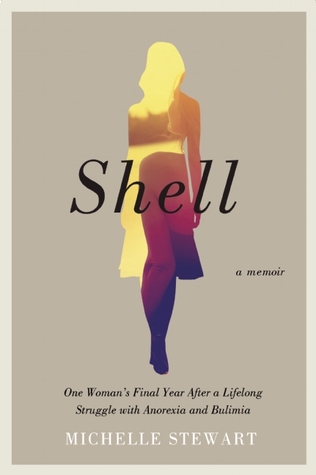
Book Review: Shell


The process of choosing comparative titles is kind of grueling. I mean, how to find a book, that’s done relatively well, but not that well so as not to set standards too high, that’s been published within a year, not self published, and that is similar to the book I’ve written, but not better…quite a challenge. Not only are there zillions of eating disorder memoirs, but also food memoirs, mental health memoirs, addiction memoirs. How to choose between all of them!

I know, Cadillac problems. Yet the issue currently facing me, stalling me , in my attempt to complete this proposal. So I decided to just pick something. I decided to go to the library and see what was there, hold it in my hand versus searching, ogling, losing my brain cells to the blue screen. That’s how I found the last book I reviewed, that’s how I found this one.

It doesn’t meet all of “the” criteria. I don’t care. What criteria it does meet is mine, reasons being several. First off, Shell discusses a somewhat controversial topic–anorexia, yes, but beyond that it discusses one woman’s choice to die, as in the right-to-die movement. It also meets another criteria, which is covering the story of a middle aged woman and her process after struggling with an eating disorder for most of her life. It discusses the complexity of dealing with marriage, employment, buying and selling houses, all of the mundane issues that come along with this stage of life and how the eating disorder affects this. It also met the criteria of a similar format to my book–it’s made up of a series of short blogs, quick page turners, as well as this woman’s poetry.

What it doesn’t include, and I wish it did, was more of a spine, a story arc. Although it states outright that this is the blog, Michelle’s thoughts, from the last year of her life, there isn’t really an arc here. At first I was intrigued, I wanted to know this person and why she is choosing what she’s choosing, but at some point her random thoughts kind of lost me. I was impressed by her thoughts on the healthcare system (she is an employee in the Natuonal Health System in Canada) and her attempts to fight for rights to treatment for those struggling with illnesses. Yet she oddly leaves herself out of this equation, discounting that she is worth it because she does not want to get better.

As mentioned, I really appreciated her courage to tell this story, to stand up in her right to decide to refuse treatment and all that brought up for her. In a way it made me feel less worried about the “controversial” nature I feel my book presents–while I am raising the question of the possibility of the sacredness of the journey of anorexia and depression, the underlying message I am sending is one of hope and self compassion for one’s struggles. Not of the right to die! Michelle’s message stands up and speaks itself, and although I don’t align with her story, it encourages me to stand up in mine. She speaks of the support and encouragement she received from sharing her shame and her story, this too gives me hope to counter the (real) fear that my story will be criticized and not helpful to anyone, only labeled as harmful or as cultural appropriation and rationalizations.

Overall, I would encourage people to at least introduce themselves to this book. It approaches as mentioned some pretty complex issues, and gives one a view into a different, middle-aged process around complications of an eating disorder. Just be prepared to feel a little lost in what reads like a string of blogs and poems slapped together to form a book. Hopefully that won’t be what someone says about my book!

Thanks for joining me on this journey. If you have any titles that come to mind that sound like the content of my upcoming memoir, Food Memories, I’d love to hear them!

“Of Course I’ll Read Your Book!”

Photo by Jens Johnsson on Pexels.com

A couple of weeks ago, I wrote about the thrill–and disappointment–I felt in receiving a response from an academic researcher I queried to review my book. As described before, I was so excited to see her response in my mailbox, yet when I opened it, she basically wished me good luck but did not offer to review my manuscript. Somewhat bummed, I wrote in the last post that this experience caused some self-doubt, but ultimately it weathered me to set out on my next goal–to write my former boss and well-known expert in the field of eating disorders to ask her if she’d take a look at my book.

This was a feat way more challenging, way more personal than the aforementioned researcher–this was a person I’d worked, laughed and cried with. Which should mean it would be easier for me to approach her, right? Fact is, when I left the position at her facility I was considered a “recovered eating disorder professional” and the journey I went on after leaving was one of what most would call “relapse.”

I have remained out of contact with this person for many years due to shame, not wanting her to know about my journey after leaving her, wishing only for my sparkling “recovered” ego to be left in her memory. Yet through the writing of this book, and some realizations I’ve had over the years, I realized there were nuggets of wisdom I had gathered from this post-recovery status, one that I am now “standing up in” in the telling of my story.

So its this story I wanted her to see, fully, warts and all, of what happened before I came to her, what I was thinking while working for her, and my journey after I left. The possibility of her seeing all of this information is at once terrifying and thrilling–her experience in the field could deem my story as an irresponsible and rationalized fairy tale of a serious situation–or it could spark a new awareness or allow for her already present awareness to be spoken alongside mine. Although I know her to be kind and considerate, her reflections could result in a shaming experience within me, a “what the hell are you thinking, putting this out into the world??” diatribe of thoughts charging through me. It could put my reputation in the recovery community at stake. Conversely, her reflections could instead result in a profound belief in myself, the story I have to tell, and her full support of it. In sending this letter to her, I know not which way this will go.

Hopefully I have clarified why this is a big challenge for me. How its one step closer to revealing my guts to the larger world to reveal this to her. And I did it. I typed up a heartfelt letter to her and sent it. I attached my full manuscript to the letter, and sent it. And I told myself to breathe.

Fifteen minutes later, FIFTEEN minutes later…she responded. With great love and connecting energy in her words, she responded. I felt the woman I had worked for for so long, and had hidden away from for so long, I felt her through her words. I felt her kindness, I felt her presence, I felt her love. Tears welled up, dripping down my face, at the swiftness and care of her response, and the words that she ended her letter with: “Of course I’ll read your book!”

Relieved, and also petrified, I let out a big breath. It is done. I cannot do anything about how she responds to the book, it is out there. Yet I feel somehow safe with my story, my wisdom, my truth in her hands. I know somehow that no matter what she says about it, I can learn, I am sturdy, and that I might just be surprised by it all.

Point is, I made this immense challenge for myself, faced this intense fear, and have set the course in motion. If anything comes of it, I am proud that I felt the courage enough to know my story and wisdom are worth sharing. Even if it isn’t “accepted” by the recovery world she represents. The point is, I don’t have to hide my story–my Self–anymore, and feel ready to weather the storm that may come as a result.

Thanks for reading and being on the journey with me.

Book Review: Going Hungry

If you didn’t know, when you’re writing a book proposal for querying agents and publishers, you need to craft what’s known as a Comparative Literature section, where you list and describe other books like yours in your field. I am pages deep into the proposal experience, and had some difficulty with choosing from the insane amounts of eating disorder memoirs, let alone food memoirs or memoirs with similar structure or themes.

Luckily I have found a few and this is the first of them I will recount, briefly, in case you are interested in this type of thing :}

going hungry: writers on desire, self-denial and overcoming anorexia, edited by kate taylor (2008), is a collection of essays written by professionals in the writing and publishing industry who have also had the experience of struggling with anorexia. I imagine, as the editor is a writer for Slate and The New Yorker, that these were people she met over the years and got to know during her time in the profession. I find it incredibly interesting that all of these authors both have this eating challenge and are professional writers.

The first essay is written by kate, the editor, and was the one that really pulled me into the book. In this, she recounted her desire to be in the hospital, be taken care of, how her illness functioned to serve this need–a story that I felt I carried alone in my experience with anorexia. So much of the external behavior of patients is one of rebellion and resistance, so I hid this desire to be hospitalized for a very long time, ashamed of it, or at least feeling very, very different from these peers I was supposed to have the same disorder as. Needless to say, her words and description of this was like beauty unfolded before my eyes, almost like a whisper calling me forward to also share my story.

She also recounted her experience with the extreme discomforts of feeling full, and the almost spiritual euphoria of being empty, and although it is not the first time I’ve seen writings on this from other journeyers, the way she described her perceptions felt like reading my own thoughts. Again, through reading I felt that suddenly I was not alone in what I thought was my own weird, shameful sub-section of anorexia or whatever it was that I had since it didn’t seem the same as others who were vocalizing their experience.

I wasn’t as pulled into the stories by the other writers in the collection–I felt as if kate taylor’s voice most matched my experience and therefore moved me deeply to read. Yet the topics each writer brought up were intriguing, revealing and honest. Most appreciated was the lack of “I’m all recovered and perfect now” stories–many were stories of how they had overcome the threatening extremes of their struggle, but still to this day were challenged by their relationship with food and their bodies.

I also appreciated that there were a few male voices in this book, as it is still so very rare to read the male experience of anorexia, despite our growing awareness that males are very much affected. In his essay, Hungry Men, John Nolan describes how although there may be some particular factors contributing to males and eating disorders, the central issue is similar no matter what gender–the “desire for control and a deep fear of what its loss would mean.” In his essay he describes this existential and mysterious undertow that takes over the lives of those with anorexia, and that urges them to take part in extremes most people would not dare to.

In Trisha Gura’s essay, The Voice, I appreciated her discussion about how those without normal motivations to eat–those with confused and sensitive appetite signals which many with anorexia struggle with–how we muster motivations to eat, especially in cultures rewarding thinness. This is such a great topic, how to “recover” in a world that is basically trying to lose weight and hate/change their bodies all of the time!

There are many things I could say about the other essays in this book, but overall I would say it is worth a read if you want to understand the complexities of dealing internally with anorexia. The layers and reasons and hidden struggles and day to day managing as one finds themselves in middle age in “kind-of” recovery, all of these are explored with different voices in this book. It is not a book to read if you want to hear heroic battle-and-win stories, nor is it gleamy and sun-shiney. It is real, and lets you peak into the lives of real people struggling with this strange and mysterious drive called anorexia. It is also a book that you might want to read if you have felt alone, and some shame around not being “recovered enough”–it may provide solace to you, as it did for me, that there are others out there thinking deeply, trying hard and yearning for life just as much as you.

Academia Hath Responded!

Photo by Анна Рыжкова on Pexels.com

One morning this week, I opened my emails to lo-and-behold find a response from one of the researchers I had contacted about my memoir and their research alignment with it. I was so very excited to see the name of the researcher sitting there in my inbox!

I waited to open it. In the email could be the path to my book finding a wider, professional audience, the momentum and direction I have been waiting for so long to receive. So yeah I waited.

…But not very long! At some point I clicked on the screen and unfolded the message before my eyes. As I read each sentence, the words began to form the sense of cold distance I had feared might come–her thanking me for my interest, considering my request to send more of her research articles my way, and then at the end of the email were the words, “best of luck with your memoir.”

Best of luck. Not, “how wonderful! I’d love to read it!”

Not, “We actually have been looking for more stories to include in our next research project, would you like to be involved?”

Nope. Just…”Best of luck.”

I reeled in my sense of disappointment after reading the email, and reasoned with myself that this was a professor at a major university, with hundreds of research projects and articles juggling in her hands. Of course she didn’t have time to read my memoir. For a moment, chiding thoughts of “how could you have even thought she would???” reverbated in my mindspace, but again, my practiced detachment from desire assisted me in stepping back from needing this person’s response. I was disappointed, but I had to believe that if she didn’t feel called to engage, there was a reason…or at least that it wouldn’t help me to be distraught over it. At least she responded so I knew it had been received.

This felt like the first lesson in “rejection” I have had yet around my memoir publishing process, and I knew it would come somehow. At least it was gentle, and I feel like it both made me face my doubts but also have some courage to try again. I really had hoped by some strange strike of luck that this connection would lead suddenly to a clear and direct path instead of the convoluted, layered one I now face. And face it I will.

My next challenge is to query my prior boss, a major leader in the recovery field, to ask her to consider reading my book, to offer me feedback about how it might be received by that world. This terrifies me, as she has no idea what happened to me, her “recovered” professional after I chose to leave her organization on my own path. I’m not exactly sure what I’m afraid of, certainly I am facing some major shame I have about what happened and not living up to her expectations. Yet that is the point of my book, to allow those who continue to struggle to have self-compassion no matter where their journey has taken them. Isn’t that the same energy I should have with myself in sharing my book with her?

Questions, questions. Hopeful not too many to prevent me from taking these next steps in revealing myself, my story to the world. Creating a website, advertising my book, letting my community know this story and standing strong despite the vulnerable light it puts me in..all of these, terrifying. Yet I know, in some way, my next step is to face the fears, all the fears that come forward in my attempts to birth this book into the world. I know I will be okay.

Even if all I read is, “Best of luck with your memoir” over and over again.

Letting Go: Of Fear of Visibility

Photo by Asaph Guedes on Pexels.com

This week I perform a piece with other students in my Butoh class. We will arrive painted in white, collapsing into the earth, fomenting and then finally rising and stretching our limbs into verticality. It is a piece that while seemingly simple and without much technique moves me on profound levels.

It is not lost on me the significance of my involvement in this practice and performance as mirroring my choice to show up more fully in the world, through the writing and sharing of my memoir. The aching process of conjuring a persona, message and story is so very alien to my long-held state of ambiguity and evanescence. Yet something in me is asking for a spine, enclosed by layers of hard-earned flesh and pumping blood, to stand up and present something in the world. For years I have not done this in part due to my utter inability to describe what I “am” and what “it” is “about”…the words not yet speech-ripe for so many wandering, lost minutes, seconds and seemingly howling eons.

Now, as I am invited to perform this abstract yet deeply moving art, as I am encouraged to step onto the stage with not something pretty, or perfect, or even completely formed to share with others–in fact asking for something quite strange, ghostly and at times grotesque and hollow.

I feel I am being called into concurrently sharing this shimmering story, message, this mirage-like persona with the world. I am being asked to rise up, vertical, stretching out and into this form, my body, my story, and express it into reality. I know it is not perfect, complete. I know also that it is not all there is, this one way of expressing myself, nor would I want to limit myself or my understanding of reality in this one way. Yet it is a movement, a stamp in time, of part of my reality, and perhaps may ripple into other’s realities and offer a moving of emotion, a sense of meaning. It is for this that I do this work, this dance, this becoming, and I await what my performance may bring.

Thank you for attending.

Letting Go: Of Waiting for Someone Else

Photo by Tasha Kamrowski on Pexels.com


The time will come

when, with elation

you will greet yourself arriving

at your own door, in your own mirror

and each will smile at the other’s welcome,

and say sit here. Eat.

You will love again the stranger who was your self.

Give wine. Give Bread. Give back your heart

to itself, to the stranger who has loved you

all your life, whom you ignored

for another, who knows you by heart.

Take down the love letters from the bookshelf,

the photographs, the desperate notes,

peel your own image from the mirror.

Sit. Feast on your life.

~Derek Walcott, Collected Poems 1948-1984 (1986).

The Academics still haven’t responded. Yet my monthly writer’s circle respond every time, always nourishing me, inspiring me, urging me to continue. I am so thankful for my Sisters of the Holy Pen. This month, one of them handed me this poem, and told me that it reminded them of the essence of what my memoir is seeking to relay. This is not a new poem to me, it has been with me for a great while, first given to me by a healer on the path of realizing my journey as sacred. So I recognized it when I saw it, and felt seen, so very seen, that this deeper message was somehow being relayed through my writings.

This poem means so much to me, it does not seek to blame or battle demons, it simply denotes a moment in time where acceptance and realization occurs. Realization of the power of self-nourishment, of self-care, of self-love, in a world that brandishes such as “selfish” and thereby creating stressed out, hollow, needy creatures always seeking external soothing. Yet it also speaks, subtly, of the deep journey one goes through after losing a major love in one’s life, and how profound it is to come back to the table of Life after going through the darkness and despair of such a loss. I’m sure it means many things to many people, as art and poetry is meant to, but these are a few ways it speaks to me.

To receive this poem, at this time, as a reflection of my writing is such a momentous metaphor–in my struggle to vocalize and share my message with the outer world, in my difficulties of thinking whether I have a message at all–this comes. It is like grace, a winking reminder from the Hermit holding his lamp up in the distance, waiting for me.

There may be an echoing silence from my external world in my attempts to share my message, but I choose to see this delivery as proof that my internal world is here, with me, guiding me as I walk in the darkness. I am so very grateful to be at this table, looking into my own mirror, feasting on my life.

Letting Go: Of Needing Other’s Approval

Photo by Pixabay on Pexels.com

As mentioned in previous posts, I’ve been on a journey to contact academics in the field who are doing research on Anorexia and finding similar themes as I cover in my upcoming memoir: Food Memories.

So far I’ve heard nothing.

But that isn’t stopping me. Today I sent out two more emails to co-authors and am persisting with a hopeful heart. Yet what I am learning is that this process has less to do with whether they approve of me and more about the journey of finding my voice and a way to describe and validate my perspective–to myself. In crafting these emails and queries and proposal letters, I have found my ideas and sense-of-self becoming more solid, more real, and like the foundation which I might stand firmly on for the rest of my life.

And in the midst of waiting-not-waiting for said approval, I’ve found some helpful guides in writing proposals, and have been hacking away at that. Again I find this process incredibly interesting and facilitating a sort of self-building I wasn’t expecting. I had previously intended to write this memoir, to self-publish it and release it quietly into the interwebs, seeing what happened. I didn’t really want to appear strongly in the equation, to yodel egoically from the mountaintop about my woes. Blech. Yet in this process I am finding I have something to say, possibly words to help others with, and that others are agreeing with that, generally. But again, I’m finding what’s most important is sense of self-building and self-approval to be the unexpected boon.

Anorexia is partially a literal and metaphorical journey to erase oneself, and reflects much about how one is influenced by a culture which consciously and unconsciously encourages that behavior, whether by diet culture or the many ways we are told to minimize our soul’s greatness in the world. In my efforts of trying to explain my story to others I have found that I am rebelling against the very spell that started it all for me. I am showing up, I am speaking my truth, I am aiming to connect with others and share what helped me, confused me, how I made it and continue to make it through these complexities. I am not hiding. I am not silent.

What a terrifying journey! Yet ultimately it is the kind of edgy one I am propelled by–just terrifying enough to push me into new and supportive arenas found after facing fears. It is in this light I continue to send queries to editors, researchers, and from where I try to share about my memoir. To wake myself up, to help others rise from their own slumber, to find that we are not alone, and that we might just matter regardless of the crazy, fucked up journeys and thoughts we might have had.

So I’m letting go of needing to hear back from these people I’m contacting, although part of me of course hopes to have some sort of response. My point is that I’m not letting the lack of response keep me from showing up in the world, from continuing to trudge forward in my attempts to find places to share my story and from discovering to myself what my story really is. And I hope, if you can relate to anything I’m saying, that you will also not let other’s approval of you keep you from putting your Soul’s howl out into the world. I want to hear all of our howls echoing across the valleys, calling us home. Calling us home.